
Choose an Edmonds Search Trail
Finding the right record depends on what is known. A full name can lead to a court party index, a recorded deed, a business filing, or a cemetery entry. An Edmonds street address works better in the Snohomish County Assessor search and the city's permit folders. A death date can lead toward an obituary, cemetery record, probate case, or vital-record index. Each source proves a different fact, so two matching facts are safer than one name match.
Jurisdiction matters from the first step. Edmonds City Hall keeps municipal business, permits, council files, and city requests. Snohomish County offices in Everett hold deeds, assessment data, elections, marriage records, and Superior Court files. Washington systems cover statewide courts, corporations, credentials, corrections, archives, and vital certificates.
A phone number is usually a lead rather than an official key. Keep the complete number, search it for a current listing, and compare the returned name with an Edmonds address or organization. Government indexes rarely offer phone-number input. A county parcel card, city staff roster, corporate filing, or school directory may still publish a number beside a verified role. Old printed phone books can help with past residents, but their exact Edmonds holdings should be confirmed with library staff first.
- Write down the name, date, address, relative, or organization already known. Keep alternate spellings and former names.
- Use an address in the Assessor search, or use a name in the county deed and statewide court indexes.
- Open the source record. Confirm dates, roles, parcel numbers, or case numbers instead of relying on a result list.
- Move to the custodian when an image is missing. Call, mail, visit, or submit the correct request form.
- Cross-check the result with a second source such as an obituary, cemetery entry, permit, or business filing.
Who Keeps Edmonds People Records
No single Edmonds office owns the whole record trail. The Snohomish County Auditor indexes recorded land documents and county marriage certificates. The Superior Court Clerk keeps probate and other Superior Court files. City staff handle municipal records, while the Assessor connects an Edmonds site to a parcel and taxpayer. Detailed disclosure rules and copy procedures appear with the Edmonds public records system.
Snohomish County Recording
3000 Rockefeller Ave
Everett, WA 98201
425-388-3483
Search Edmonds Deeds by Name
The Snohomish County recorded-document database is a strong name-based starting point. It covers most documents recorded from July 1976 forward. A free account is required as of March 2, 2026. Choose a category, accept the disclaimer, enter the terms, and submit. Name queries should use Last Name, First Name. Preview images are unofficial; purchased copies remove the watermark or add certification.
The recorded-document screen shows why this index differs from a broad people finder.
Open the official recorder search to use the fields shown here.
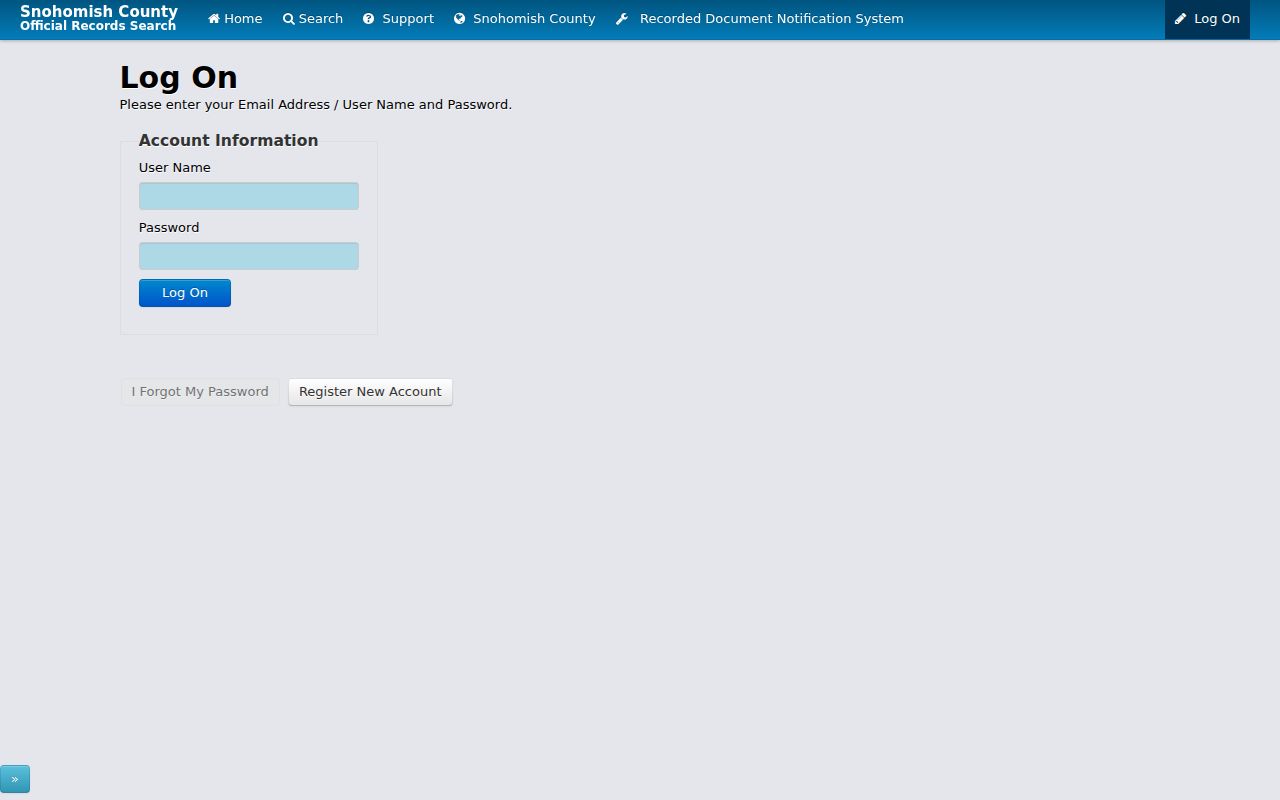
A deed result can connect an indexed party to a date, document type, parcel reference, and recorded image.
| Recorder option | Best use | Format note |
|---|---|---|
| Name | Grantor or grantee trail | Last Name, First Name |
| Recording number | Known instrument | Use the ARN |
| Parcel ID | Land-linked documents | Enter the first 10 digits |
| Book and page | Older citation | Enter both parts |
| Legal description | Plat, survey, or condo | Use the Legal category |
- Grantor
- The person or entity giving an interest in a recorded document.
- Grantee
- The person or entity receiving that interest.
- Index
- A locator that points to the recorded instrument, not a substitute for the full image.
Note: Keep the recording number and party role; the same name can appear in several unrelated Edmonds transactions.
Older Edmonds Deeds Still Survive
The July 1976 online boundary is not a loss date. Earlier Snohomish County instruments remain on microfilm at the Everett Customer Service Center. Searchers may visit the public records area, call Recording at 425-388-3483, or mail the county's copy-request form. Staff research for older material may cost $8 per hour. The counter is in the Robert Drewel Building at 3000 Rockefeller Avenue and is open weekdays from 9 a.m. to 5 p.m.; visitors should arrive at least 30 minutes before closing.
This fallback matters for long Edmonds ownership chains. A modern deed may name a prior recording number, book and page, legal description, or former owner. Carry that citation back to microfilm. The county also accepts requests by email, fax, and mail when travel to Everett is not practical.
City land-use evidence follows another route. Edmonds directs permit researchers into the Development Services folder in its WebLink archive, then through street folders and building addresses. Planning, building, engineering, site drawings, and related permit documents may identify an applicant, designer, contractor, or property contact. It is an address browser, not a verified owner-name search. When an in-city address is missing, send the City Clerk a narrow public-records request with the address, record type, department, and date span.
Turn Edmonds Addresses into Owners
The Snohomish County Property Summary Search accepts a 14-character real-property parcel number or a street address. It does not expose an owner-name box on the current public landing form. Search an Edmonds address first, then use the parcel card for the owner or taxpayer name, mailing and site addresses, legal description, values, sales, tax districts, and map links. A mailing address does not prove that the owner lives at the site.
The official Assessor form shows the parcel and street formats used for an Edmonds lookup.
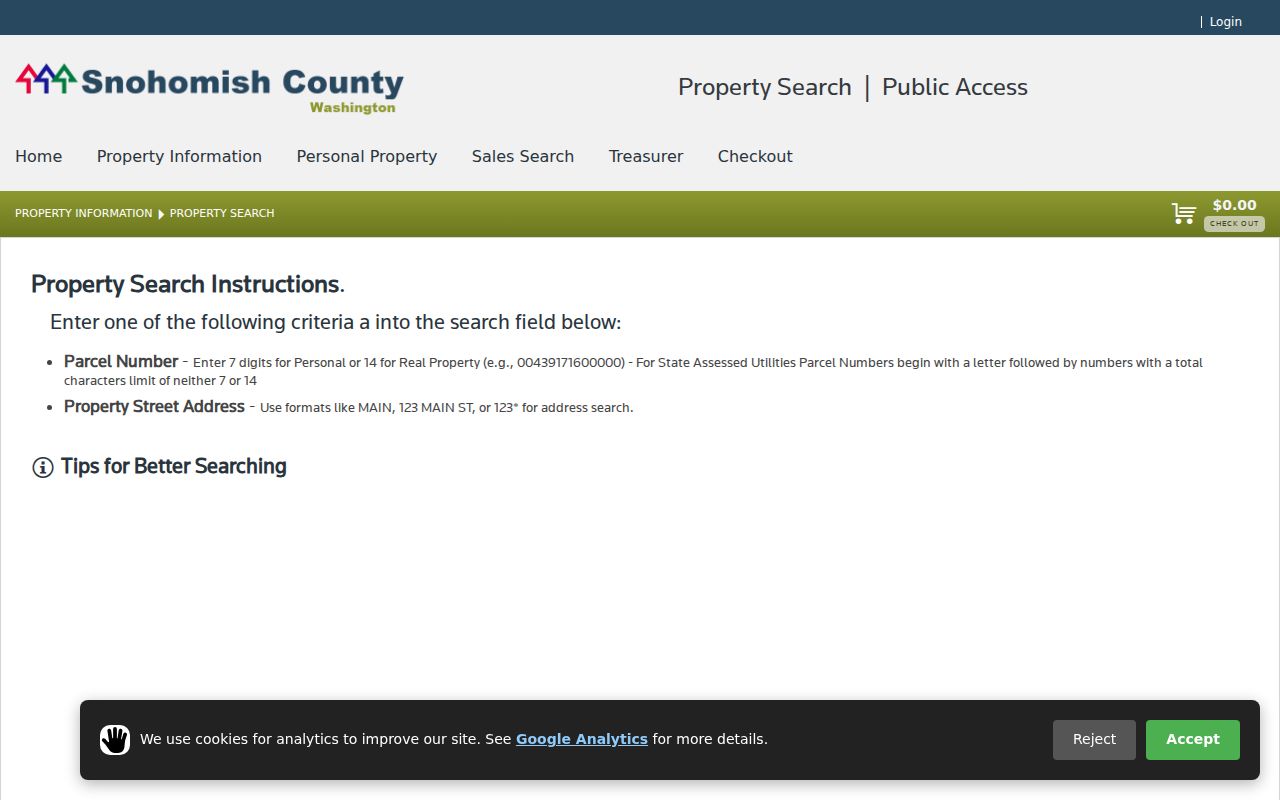
The form also accepts a street fragment or wildcard, useful when an old source gives an incomplete address.
If the parcel number is unknown, SCOPI provides the bridge. Selecting a parcel on the map reveals its ID, property address, owner, and appraisal neighborhood. Keep the full 14-character Assessor number, but use only its first ten digits in the recorder's Parcel ID field.
Locate Edmonds Court Records
Washington Courts Search Case Records locates cases by name or case number across municipal, district, superior, and appellate courts. It is only an index and brief synopsis. The official file stays with the court where the case was filed. Edmonds Municipal Court handles city misdemeanors, traffic and parking matters. County District Court handles its limited-jurisdiction matters, while Superior Court holds felony, larger civil, family, probate, juvenile, and appeal files.
The statewide case locator provides the first court and case-number check.
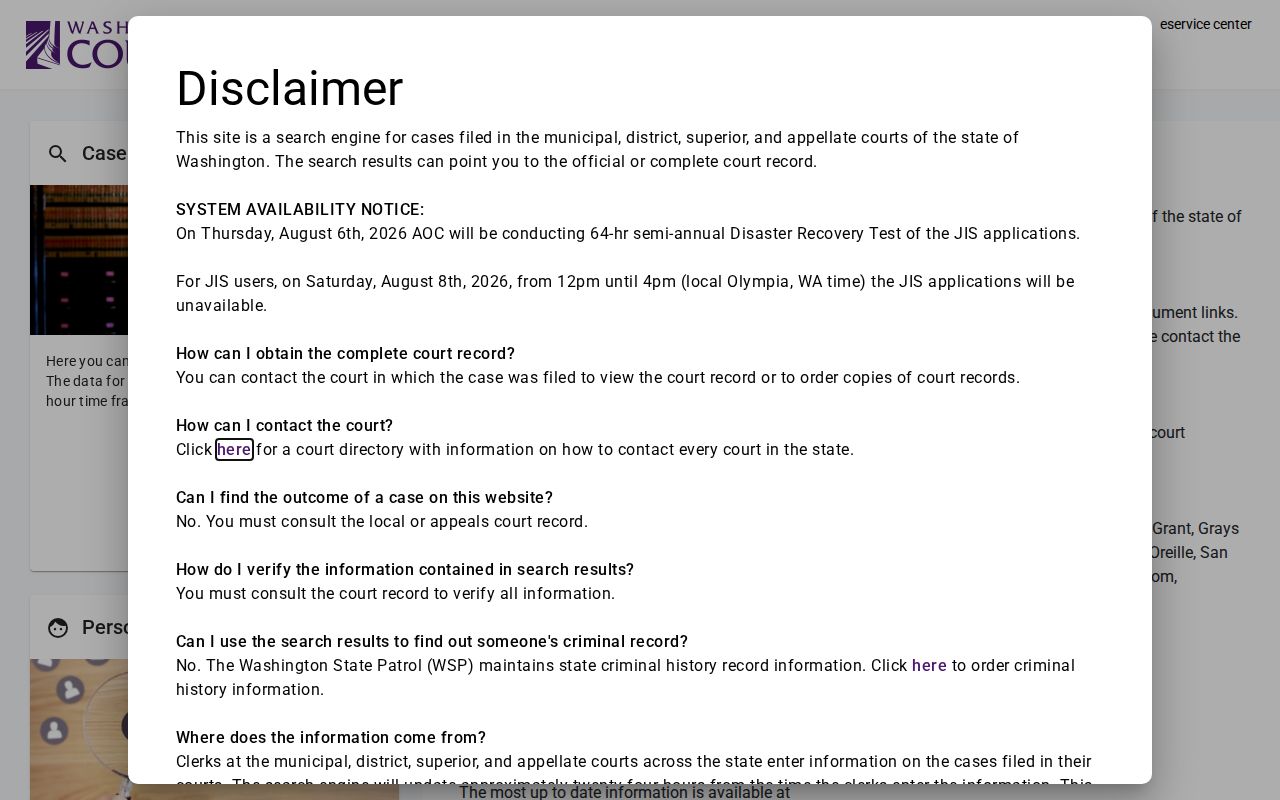
Use the result to contact the listed court, not as proof of a final outcome.
| Edmonds court trail | Typical matters | Full-file route |
|---|---|---|
| Municipal Court | City misdemeanors and infractions | City court-record request |
| District Court | County limited cases | Relevant division clerk |
| Superior Court | Civil, felony, probate, family | Clerk counter, mail, Digital Archives, Odyssey |
| Federal court | Western District of Washington matters | PACER or federal clerk |
Court case files follow court rules such as GR 31, not the Washington Public Records Act. Sealed, juvenile, adoption, and other protected material may be withheld.
Build an Edmonds Probate Trail
A probate search can connect a deceased Edmonds resident to family members. Start with the statewide case locator. A filed petition, notice, will, or estate document may name heirs, a personal representative, relatives, or property. Then compare those names with an obituary, cemetery entry, deed, and eligible death-record evidence. A common surname alone is not enough.
Snohomish County treats wills differently before and after death. A deposited will remains sealed while the person is alive, though anyone may ask whether one is on deposit. Viewing requires the testator's identification or a court order. After death, the custodian must file the will within 40 days, and it becomes public. The Superior Court Clerk is the official source for the probate file and certified copies.
Trace Edmonds Vital Records
Birth and death certificates for Edmonds are issued through the Snohomish County Health Department and the Washington Department of Health. Chapter 70.58A RCW limits certified birth and death products to qualified applicants who provide identity and relationship evidence. Informational copies may be available under different rules, but they are not certified legal copies.
The Snohomish County Auditor issues county marriage licenses and certified copies. Statewide marriage and divorce certificates from 1968 forward come from Health, while a divorce decree comes from the Superior Court Clerk. For historical research, Washington State Archives access generally begins after 100 years for births and fetal deaths, and after 25 years for deaths, marriages, divorces, dissolutions, invalidity, and legal separation. Sealed records remain sealed.
VoteWA is a separate self-service path for a person's own registration. It requires an exact first name, last name, and full birth date. Washington does not register voters by party, and participation history shows only that an election was credited, never how a ballot was marked. The public statewide extract follows a different request and restriction process. The full Edmonds voter registration record route explains that divide without treating the private login as a public name directory.
Search Edmonds Cemetery Names
The city-operated Edmonds Memorial Cemetery database offers an unusually direct local name search. Enter the first two or three letters of a surname, add a first name or year of interment, and filter for veteran status when helpful. The research did not verify its exact coverage years or every result field, so confirm a match with cemetery staff or another record.
The cemetery's live search form shows its four filters.
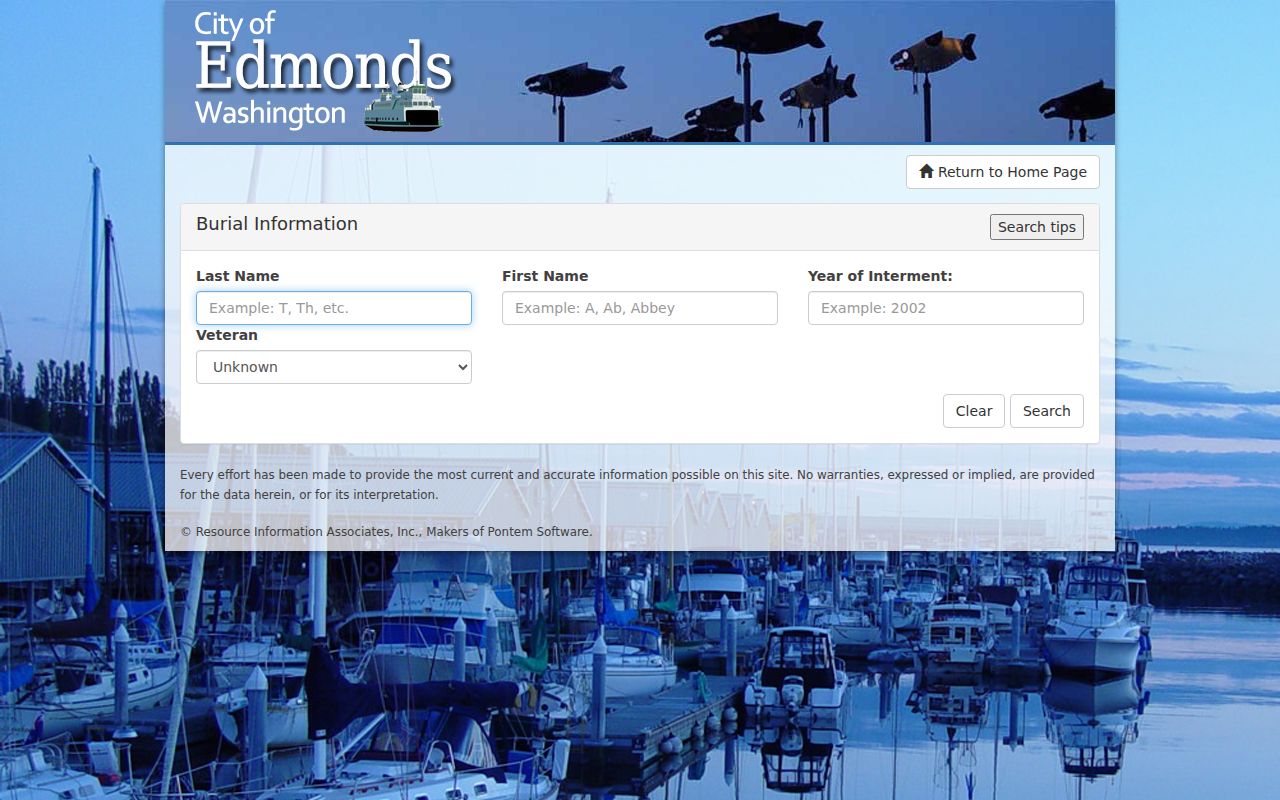
A burial match supplies a date anchor that can sharpen obituary, probate, marriage, and archive searches.
Follow Edmonds Library History
Sno-Isle Libraries genealogy resources extend beyond current public files. Ancestry Library Edition is available in a branch. Library-card users can reach MyHeritage, with records from the sixteenth century forward, and HeritageHub, which covers obituaries and death notices from 1704 to the present. The system also offers historical Snohomish and Island County photographs.
Call the Edmonds Library at 425-771-1933 or book a librarian before assuming a specific city directory, reverse directory, phone book, yearbook, or newspaper run is on its shelves. The published branch pages do not state exact local holdings or years. The Edmonds Historical Museum adds property files, photographs, surveys, community profiles, and publications that can connect a person to a building.
Chronology helps keep names straight. Edmonds began as a small mill and rail community, incorporated in 1890, and grew from village-scale listings into a city of more than 42,000 people by the 2020 census. The 1895 Polk description placed the community near 750 residents. Modern name collisions are far more common, so match a directory entry to a date, spouse, work role, or street. Historic Sanborn maps from 1909 and 1926, plus the 1932 correction, can translate an old business or home location into the present street pattern.
Check Edmonds Custody Lookups
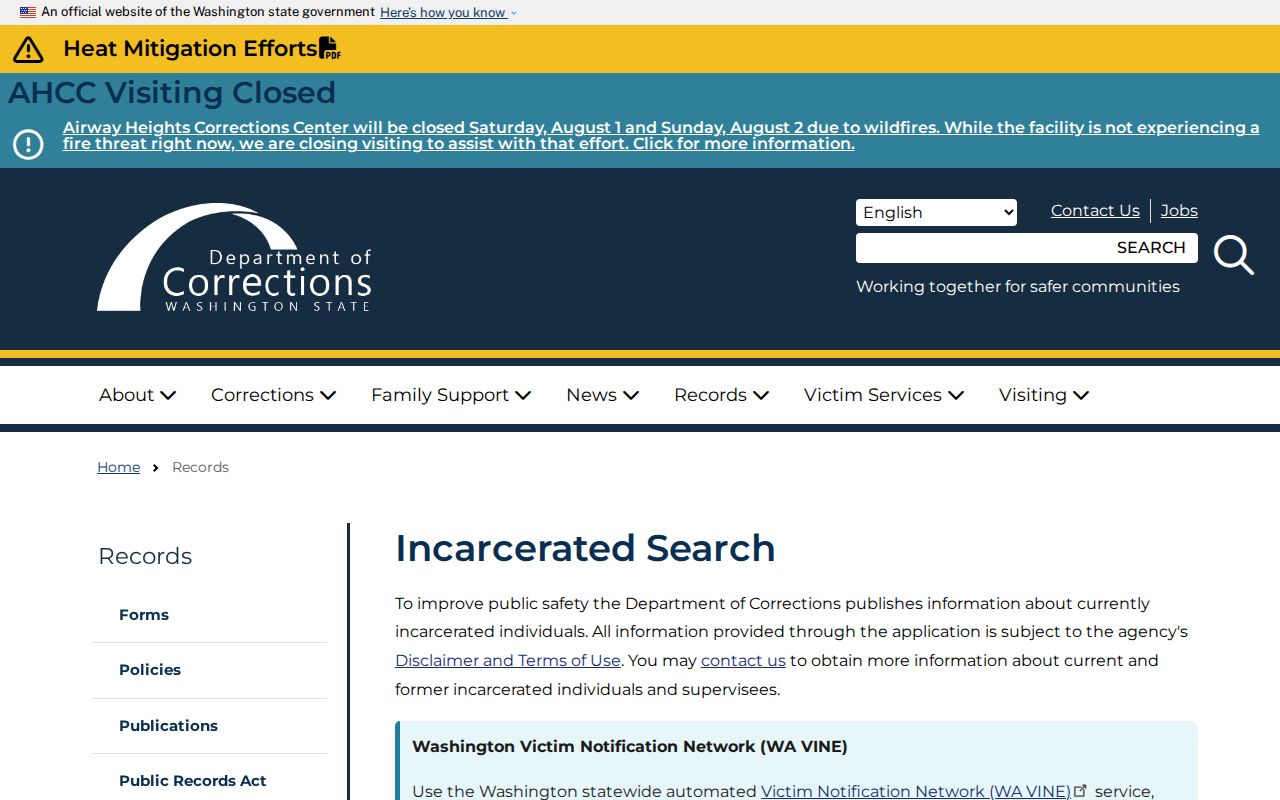
Recent county custody begins with the Snohomish County Jail Register. State incarceration is separate. The Washington Department of Corrections search accepts a first and last name or DOC number, and its results can show age and location. Custody status changes, so confirm directly with the agency before acting on a match.
The Washington incarcerated-person search displays the statewide query fields.
The county warns that scammers mine real booking data, research a person's associates, and demand fake bail payments. The Sheriff's Office does not request inmate payment through mobile apps or off-site check cashing. Verify a claim with the jail at 425-388-3395.
Link Edmonds Names to Businesses
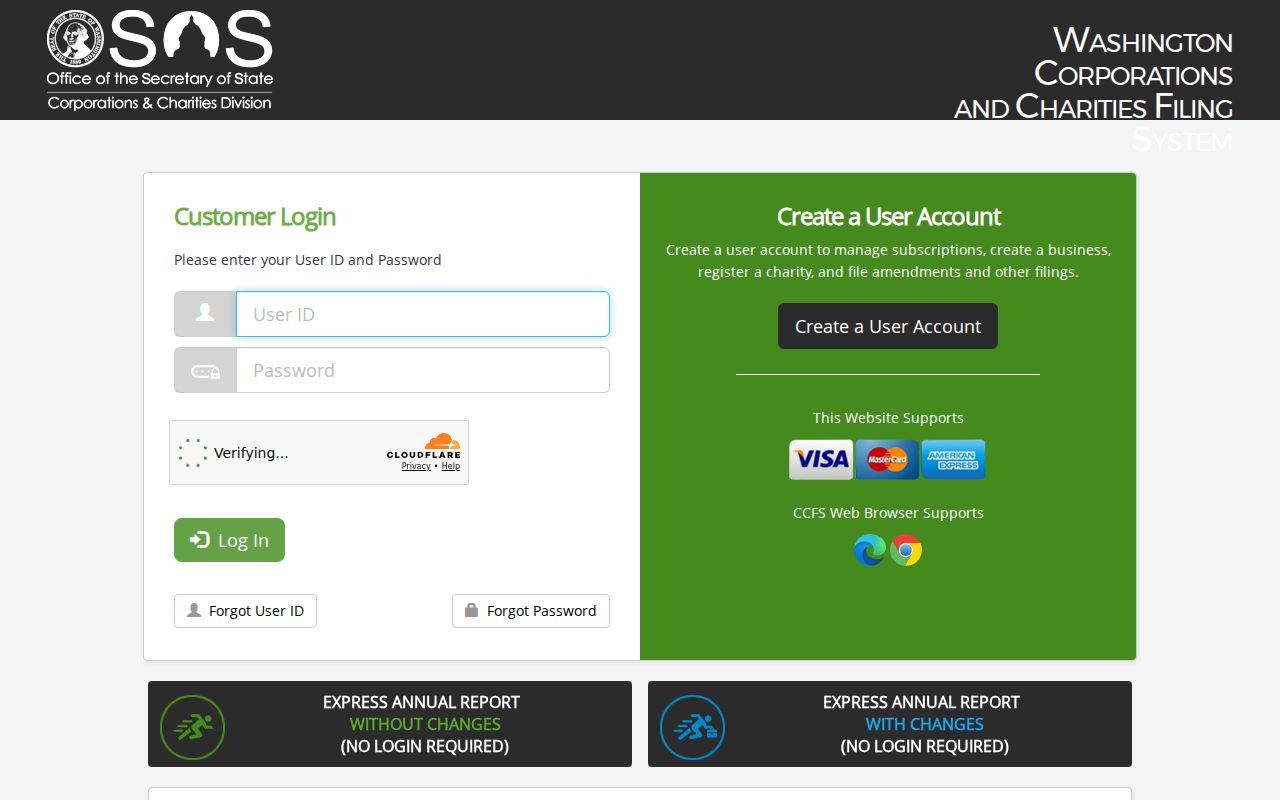
The Washington Corporations and Charities Filing System searches corporations by business name or Unified Business Identifier, known as a UBI. Filing records may identify a registered agent, governing people, principal address, status, and filing history. A business-name result can therefore link an Edmonds name to an official entity role, but it does not prove that the person owns the listed property or still holds the role.
The official CCFS search separates corporation, charity, and trademark modes.
Cross-check the UBI and exact entity name in Washington Department of Revenue Business Lookup, then compare the filing date and current status.
Compare Edmonds Search Sources
Official records and commercial databases answer different questions. Public custodians document a transaction, case, filing, parcel, or license under stated rules. Commercial tools combine many sources and may be faster for a broad name query, but their addresses, phone data, and relative links can be stale or attached to the wrong person. Never treat an automated match as a certified fact.
| Source type | Strength | Limit |
|---|---|---|
| Official index | Named keeper and defined record role | May be only a locator |
| Certified copy | Custodian-backed record | Fees and eligibility may apply |
| Commercial compilation | Broad starting point | Source date and identity match may be unclear |
| Library or museum source | Historical context | Coverage varies by collection |
Respect Edmonds Search Boundaries
Some dead ends are lawful protections. Washington's Address Confidentiality Program lets eligible participants use a substitute address, including for protected voter registration and certain marriage records. Sealed cases, adoption material, private identifiers, juvenile information, and restricted vital certificates are not made public merely because a related index exists.
Use Edmonds records for lawful personal research, family history, civic review, fraud checks, and reconnection. Do not use an address or family link to stalk, harass, threaten, or harm someone. Record what was searched, when it was checked, and which custodian confirmed it. That short audit trail makes it easier to correct a false match later.